
Going to College with a Chronic Illness: A Resource Guide

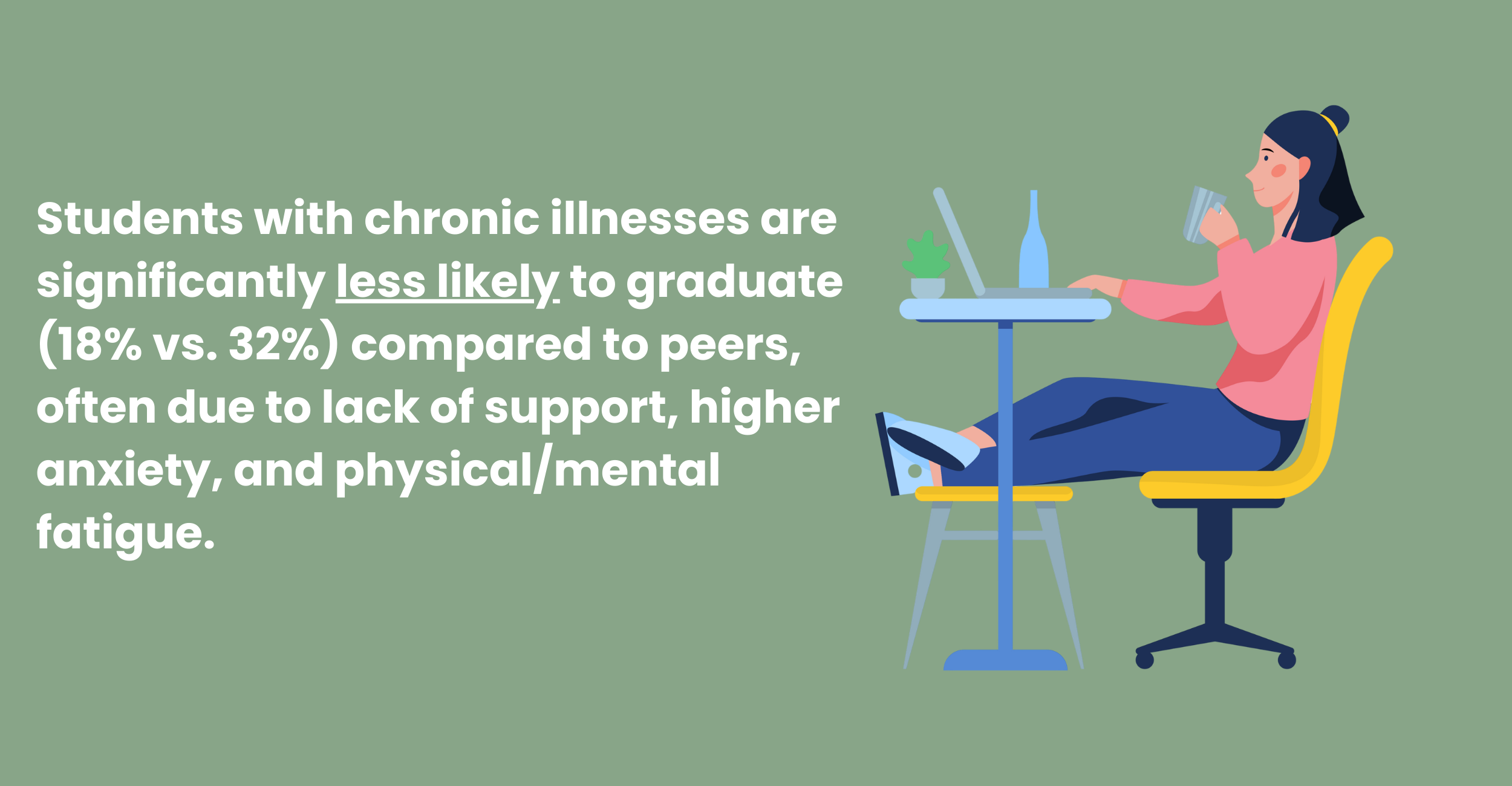
College attendance with a chronic disease or condition presents unique challenges that extend beyond typical academic pressures. Research shows that students with long-term conditions face high risk of educational problems and are less likely to graduate high school or attend college. But pursuing higher education remains achievable with the right preparation and support.
Your success depends on understanding your legal protections, securing appropriate accommodations, and building strong support systems. The Americans with Disabilities Act (ADA) and Section 504 of the Rehabilitation Act of 1973 safeguard your rights in federally funded educational programs. You’re entitled to reasonable accommodations that level the playing field.
This guide covers what you should know about navigating college life while managing your condition, from accessing campus resources to advocating for your needs and explaining a chronic disease to someone.
Understanding Your Rights and Legal Protections
Two federal laws protect students with chronic diseases in higher education. The Americans with Disabilities Act covers public colleges through Title II and private institutions through Title III. Section 504 of the Rehabilitation Act applies to any school receiving federal financial assistance. These laws replace the Individuals with Disabilities Education Act (IDEA), which only extends through K-12 and does not apply to postsecondary settings.
The legal framework changes by a lot when you enter college. High schools identify students who need support, but you must self-identify your disability and request accommodations. Colleges have no obligation to find which students need assistance proactively. You must take the initiative to disclose your condition.
Chronic diseases qualify as disabilities when they substantially limit one or more major life activities. Major life activities include functions like breathing, eating, sleeping and concentrating. They also include the operation of major bodily systems such as immune and neurological systems. Conditions like asthma, diabetes and food allergies may qualify as disabilities under Section 504. Notably, impairments that are episodic or in remission still qualify as disabilities if they would substantially limit a major life activity when active.
Privacy protections strengthen in college. You control who accesses your disability-related records as an adult, and that includes your parents.
Getting Academic Accommodations and Campus Resources
Securing accommodations starts with contacting your campus disability services office, which may operate under names like Access Services or Student Disability Center. You’ll need to register, even if you received accommodations in high school through an IEP or 504 plan, as these do not transfer automatically.
Documentation takes three forms that are accepted. Your self-report serves as main documentation, where you describe how your condition limits you and what accommodations have worked previously. Secondary documentation comes from observations during your interactions with disability services professionals. Tertiary documentation has medical records, assessments and reports from healthcare providers. The commonsense standard applies here, meaning you won’t always need extensive diagnostic evidence when your condition and its effect are apparent.
You participate in an interactive process with a disability services counselor who reviews your request after you register. The counselor considers your self-report, documentation and academic program requirements. This shared approach determines accommodations such as extended test time, note-taking services, priority registration and flexible attendance policies.
Schedule private meetings with professors during their office hours to discuss your needs after you receive your accommodation letter. Remind instructors about testing accommodations at least one week before each exam.
Managing Daily Life and Building Support Systems
Energy management becomes critical at the time you balance academics with chronic illness. Pacing involves consciously alternating activity with planned rest before exhaustion hits. Schedule rest in advance rather than waiting until symptoms worsen. Building recovery days into your week helps maintain stability and reduces crashes.
Sleep requires 8 to 10 hours for many students with chronic conditions. Start your day with 15 to 30 minutes of sunlight to regulate your circadian rhythm and stabilize melatonin levels. Quality rest affects symptom management and academic performance.
Support networks provide both emotional understanding and practical assistance. The Center for Chronic Illness offers free virtual support groups that licensed mental health professionals facilitate, including sessions for teens and young adults with chronic illness. Campus disability clubs create spaces to meet others who share similar experiences.
At the time you explain your condition to friends, simplify medical terminology by answering two questions: why it happens and what it causes. Share resources from advocacy organizations so loved ones can learn about your condition on their own. Set clear boundaries about which questions feel comfortable to answer. Use language like “I’m flaring today” or reference the spoon theory to communicate energy limitations. Request concrete support such as note-sharing or rides to appointments and ask for understanding at the time you cancel plans last minute.
Resources for Students
Organizations
Chronic Disease Coalition
A nonprofit advocacy organization that works to protect the rights of people living with chronic diseases. It focuses on influencing healthcare policy, raising awareness, and empowering patients to advocate for better access to affordable care and treatment.
Partnership to Fight Chronic Disease
A national coalition of patients, healthcare providers, and organizations that raises awareness about the impact of chronic diseases. The group promotes prevention strategies and public policies aimed at improving treatment and reducing healthcare costs related to chronic conditions.
National Association of Chronic Disease Directors (NACDD)
An organization that brings together thousands of public health professionals to promote health and reduce the burden of chronic disease. It supports research, education, and collaboration among health departments, universities, nonprofits, and other partners.
Good Days
A nonprofit charitable organization that provides financial assistance, advocacy, and educational resources for people living with chronic illnesses. Its programs help patients afford life-saving or life-extending treatments and manage the costs of ongoing care
Center for Chronic Illness
A nonprofit organization focused on improving the well-being of people affected by chronic illness. It offers virtual support groups, educational programs, and community resources to reduce isolation and support emotional health.
National Organization for Rare Disorders
A leading nonprofit patient advocacy organization dedicated to people with rare diseases. It works to advance research, improve access to care, provide patient assistance programs, and advocate for policies that support the rare disease community.
PAN Foundation
A nonprofit organization that helps people with chronic, rare, or life-threatening diseases afford treatment. It provides financial assistance for medication costs and promotes policies that improve healthcare access and equity.
EveryLife Foundation for Rare Diseases
A nonprofit advocacy organization that empowers the rare disease community to influence public policy. It promotes science-driven legislation and programs that support the development and accessibility of treatments, diagnoses, and cures for rare diseases.
Research
Chronic Illness and Student Experiences
This research article examines how chronic illness affects students’ academic experiences, including mental health, participation, and access to accommodations. It highlights the challenges students face balancing health management with academic responsibilities.
College Students with Chronic Illness: Well-Being and Academic Experiences
This scholarly article explores how chronic illness influences college students’ well-being, social life, and academic engagement. The study discusses barriers students face and emphasizes the importance of institutional support and accommodations.
Chronically Ill College Student Well-Being: A Systematic Review of the Literature
This systematic review analyzes existing research on college students living with chronic illnesses. It identifies common themes such as stress, reduced participation, and the need for improved campus support systems.
Adolescent and Student Well-Being with Chronic Health Conditions
This article investigates how chronic health conditions influence young people’s psychological well-being and academic outcomes. It also explores the role of support networks and coping strategies in improving students’ experiences.
The Chronic Illness Initiative Report
This report outlines a program designed to support college students with chronic illnesses. It discusses strategies for improving campus awareness, increasing access to accommodations, and helping students succeed academically and personally.
Psychological and Social Aspects of Chronic Illness
This academic article explores the emotional, psychological, and social challenges faced by individuals with chronic illness. It highlights how chronic conditions can affect identity, relationships, and quality of life.
College Students with Chronic Illness and Disability
This research focuses on the experiences of students managing chronic illness in higher education. It examines factors such as disclosure of disability, stigma, and the effectiveness of institutional support services.
Health and Education Outcomes for Young Adults with Chronic Conditions
This study examines how chronic medical conditions affect students’ health, educational progress, and quality of life. It emphasizes the importance of accessible healthcare and supportive academic environments.
Psychological Health in Young People with Chronic Illness
This article investigates the relationship between chronic illness and psychological well-being in young adults. It discusses coping mechanisms, emotional resilience, and the role of support systems.
College Students with Chronic Illness: An Exploratory Study
This graduate thesis examines the academic and personal challenges faced by college students with chronic illnesses. The research explores student perspectives and suggests ways universities can improve support services.
Resources
Crohn’s & Colitis Foundation: Disability Support for College Students
This resource provides guidance for students with inflammatory bowel diseases navigating college. It explains disability accommodations, communicating with professors, and managing symptoms while pursuing higher education.
American Partnership for Eosinophilic Disorders: Managing EAD in College
This patient story describes the challenges of attending college with eosinophilic-associated diseases. It offers insights on self-advocacy, managing health care needs, and balancing academics with medical care.
Global Healthy Living Foundation: Navigating University Life with Chronic Illness
This article provides practical advice for students with chronic illnesses entering college. Topics include requesting accommodations, maintaining health routines, and finding support on campus.
National Disability Center: Supporting College Accommodation Requests
This guide helps healthcare providers understand how to support students requesting disability accommodations in higher education. It explains documentation requirements and effective communication with universities.
American Psychological Association: Disability Advocacy Toolkit
This toolkit offers strategies for promoting disability inclusion and advocacy. It provides educational materials and guidance for supporting students with disabilities and chronic health conditions.
Bezzy Migraine: Attending College with a Chronic Condition
This article shares tips for students managing chronic health issues while attending college. It discusses strategies for managing symptoms, maintaining academic performance, and accessing campus support.
American College of Osteopathic Family Physicians: Navigating Accommodations in Medical School
This guide explains how medical students with disabilities or chronic illnesses can access accommodations. It covers documentation, advocacy, and strategies for succeeding in demanding academic programs.
URevolution: Managing Chronic Illness at College
This article discusses practical approaches for balancing college life with chronic illness. It focuses on time management, communicating with professors, and maintaining physical and mental health.
Support Groups
HeyPeers – Chronic Illness Support Groups
This page provides access to online support groups for individuals living with chronic illnesses. It connects people with peer-led and professionally moderated virtual groups where participants can share experiences, learn coping strategies, and build supportive communities.
CDC – Social Media Resources for Public Health
This page from the Centers for Disease Control and Prevention provides tools and guidance on using social media to share public health information. It includes resources for organizations to promote awareness, education, and prevention related to health conditions.
Center for Chronic Illness – Programs
This page outlines the programs offered by the Center for Chronic Illness, including virtual support groups, workshops, and community events. These programs are designed to help individuals living with chronic conditions build connection, resilience, and emotional well-being.
CHYP – Chronic Health Young People
This organization focuses on supporting young people living with chronic illnesses. It provides resources, community support, and opportunities for youth to connect, share experiences, and advocate for improved understanding of chronic health conditions.
Generation Patient – Higher Education Resources
This page provides resources and guidance for students with chronic illnesses navigating higher education. It focuses on advocacy, accommodations, and strategies to help students succeed academically while managing ongoing health conditions.
National Organization for Rare Disorders
This page highlights the Center for Chronic Illness as a partner organization within the rare disease and chronic illness community. It explains the organization’s mission to provide support programs and improve the well-being of individuals living with chronic conditions.
Everybody Empowered – Teen Support Groups
This resource provides information about online support groups designed specifically for teenagers managing chronic illnesses. The groups offer a safe space for teens to share experiences, develop coping skills, and connect with others facing similar health challenges.
Psychology Today – Chronic Pain & Illness Group Therapy
This listing describes a group therapy program for individuals living with chronic pain or chronic illness. The group focuses on emotional support, coping strategies, and improving quality of life through guided therapy sessions.
NAMI – Support Groups
The National Alliance on Mental Illness offers peer-led support groups for individuals experiencing mental health challenges and their families. These groups provide education, community support, and a space to share experiences and coping strategies.
Your Future Awaits
College with a chronic illness just needs preparation, but success remains achievable. Note that legal protections exist to support your educational experience. Your rights under ADA and Section 504 guarantee access to accommodations. So take initiative to register with disability services and communicate with professors. Prioritize energy management strategies. Support networks provide emotional and practical assistance. You deserve your education, and with proper planning and advocacy, you can thrive while managing your health.